Posts

Week 10-Banter and Quibble

BANTER and QUIBBLE I love banter and quibble week!  We had fun throwing around fun insults like "Thou art a saucy fly-bitten barnacle!"  The 1st semester is winding down.  Please turn in your Hamlet summaries.  We're just about done reading Hamlet and will be starting "Hamlet in 10 minutes".  We will be performing this for parents night in January.  Date TBA.   Lecture:  Banter and Quibble Banter - arguing wittily Example: Act I scene 2 from Hamlet Hamlet. But what is your affair in Elsinore? ... Horatio. My lord, I came to see your father's funeral. Hamlet. I pray thee, do not mock me, fellow-student; I think it was to see my mother's wedding. Horatio. Indeed, my lord, it follow'd hard upon. Hamlet. Thrift, thrift, Horatio! the funeral baked-meats Did coldly furnish forth the marriage tables. Example: From Act IV scene 3 of Hamlet HAMLET At dinner. CLAUDIUS At supper where? HAM...
Week 9-Soliloquy, Aside, and Set Piece

Week 9 Our lecture this week was on Soliloquies, Asides, and Set Pieces.   Here are some definitions, examples, and explanations of each that I found on the internet: So·lil·o·quy "A speech in which a character is alone with his private thoughts: it tells the audience what the character is thinking" -The Complete Idiot's Guide to Shakespeare By Laurie Rozakis "The literary terms “soliloquy” and “monologue” are often used interchangeably. There are, however, technical differences. Both are delivered by a single speaker. Both are speeches as opposed to an interchange of dialogue. So what’s the difference? It has to do with the audience. In soliloquies, the speaker delivers his or her speech to no one in particular, unless it’s to him or herself and naturally to the audience. A monologue, by contrast, is delivered to other characters." -https://www.litcharts.com/blog/shakespeare/soliloquy-in-romeo-and-juliet/ Example: HAMLET: To ...

Shakespeare Week 8

Image
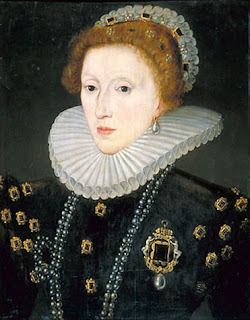
Shakespeare Week 8 This week we read Act III scene 3-4.   Roseland gave us the vocabulary word, marry, which means indeed.   She also gave a thorough presentation on the life of Queen Elizabeth.   We talked a lot in class about how the year is flying by and we have less than 5 weeks to watch, listen, and/or read Shakespeare’s plays.   The ultimate goal is 17 plays.   At the end of the semester you will be crowned or not crowned according to your class.                                                                              Class                                                             ...

Week 7: Imagery Using Metaphors and Similes

Week 7: Imagery Using Metaphors and Similes This week Juliet gave a presentation on what people wore during Shakespeare’s time.   Roderigo gave us the vocabulary word which was "couch" which means “to go to sleep”.   We read Act III Scene 3.   We learned about metaphors and similes.   What is a metaphor? “met·a·phor (noun) a figure of speech in which a word or phrase is applied to an object or action to which it is not literally applicable. -Online Dictionary “A metaphor is a figure of speech that describes an object or action in a way that isn't literally true, but helps explain an idea or make a comparison. Here are the basics: A metaphor states that one thing is another thing. Here are the basics: 1.             A metaphor states that one thing is another thing 2.             It equates those two things not becaus...

Week 6: Poetic Language-Couplets, Quantrain , and Rhyme Royal

Week 6: Poetic Language-Couplets, Quantrain , and Rhyme Royal This week we learned about rhyming schemes.   Patience gave us a presentation on the Geography of England.   Portia gave us the vocabulary word and we read Act III Scene 1.     Rhyme Scheme Quantrain a verse/stanza of four lines, especially one having alternate rhymes. Example: Hamlet Act III Scene 2 page 114 Player Queen (a) O! confound the rest ; (a) Such love must needs be treason in my breast ; (b) In second husband let me be accurst ; (b) None wed the second but who kill’d the first . Couplets two lines of verse, usually in the same meter, two successive rhyming lines in a verse Example: Act II Scene 2 page 79 Polonius …That we find out the cause of this effect , Or rather say, the cause of this defect ,… Example: Act I Scene 4 page 57 Hamlet …By Heaven! I’ll make a ghost of him that lets me: I say away! Go on, I’ll follow thee. ...

Week 5: Prose, Blank Verse, Free Verse, and Iambic Pentameter

Prose               Blank Verse Poetry     Iambic Pentameter    Blank Verse    Iambic Pentameter  Blank Verse Free Verse  Free Verse   Prose This week we reviewed iambic pentameter and learned the differences between prose, blank verse, and free verse.   We read the rest of Act II scene 2.   Sampson gave his presentation on “The Ruling Class.”   He taught us about the different social classes during the Elizabethan Era.   They were monarch, nobility, gentry, merchants, yoemanry, and laborers.   Patience gave us the vocablulary word: “argosies” which means large merchant ships.   After all of that we still managed to slip in a game.   Here is a re-cap of what we learned: We used this worksheet to learn the difference between poetry and prose.   Poetry and Prose: What's the Difference? http://www.readwritethink.org/files/resources/p-as...

Week 4: Iambic Pentameter

Image
This week we had a visitor in our class.   We would like to thank Betty for visiting our class.   In class we read Act 2 scene 1 and part of scene 2 (up to line 221).   We learned a little about Iambic Pentameter.   We watched a short youtube video that explains iambic pentameter.   Adriano gave us the vocabulary word this week.   Assignment Reminder: I dug in and looked at the Bonus Question from Week 3.   Some of you could not find “Wittenbereng.”   I could not either.   I believe that the word was misprinted in the manual and should read “Wittenberg.”   Wittenberg is where Hamlet went to school with Horatio, Rosencrantz, and Guildenstern. Writing Assignment: Make a plot chart. Describe the plots being laid. Bonus Question: Where did the phrase eavesdropping originate?         October 10 th Presentation: Sampson (Ian) The Ruling Class ...

Shakespeare Week 3

Image
Shakespeare This was a great week.      In class we Read Act I scene 3-5 in hamlet.   We also played a 2 nd round of hitchhiker.   Thank you, Angelo for bringing cookies!   Thank you all for turning in your papers this week.   A lot of you are making good progress watching/listening/reading Shakespeare’s plays.   Keep up the good work!   Our lecture this week was about the different kinds of plays.   Shakespeare wrote 4 different kinds: Histories, tragedies, comedies, and problem plays. (7) Histories : The plays dramatize generations of Medieval trials.   They depict Joan of Arc, the Hundred Years of War with France, and the War of the Roses between York and Lancaster.   It is a historical narrative. (the plays: king john, Richard II, henry IV parts I and II, Henry V, henry VI parts I, II, and III, Richard III, Henry VIII) (11) Tragedies : “Shakespeare’s tragedies are...easiest to identify because they con...

Week 2: The Plays

Image
In class this week Angelo started us out with Vocabulary and Ms. Marina did a presentation on God, Religion, and Superstition during Shakespeare’s time.   Ms. Ursula Taught us all about the characters in hamlet.   She also went over the entire summary of hamlet before we read in class Act I scenes 1-2.   We ran out of time so we will finish the lecture on the types of plays next class. Presentation: God, Religion, and Superstition given by: Ms. Marina The two major religions in Elizabethan England in the 1500's were the Catholic and Protestant religions. In Shakespeare’s time the law said that you had to go to church every week.   England at the time had no separation between church and state. Traditionally, the country was ruled politically by the king and spiritually by the Roman Catholic Church. However, Shakespeare's was the first generation in which the monarch, rather than the Pope, served as the country's spiritual head. The shift to Protestantism...